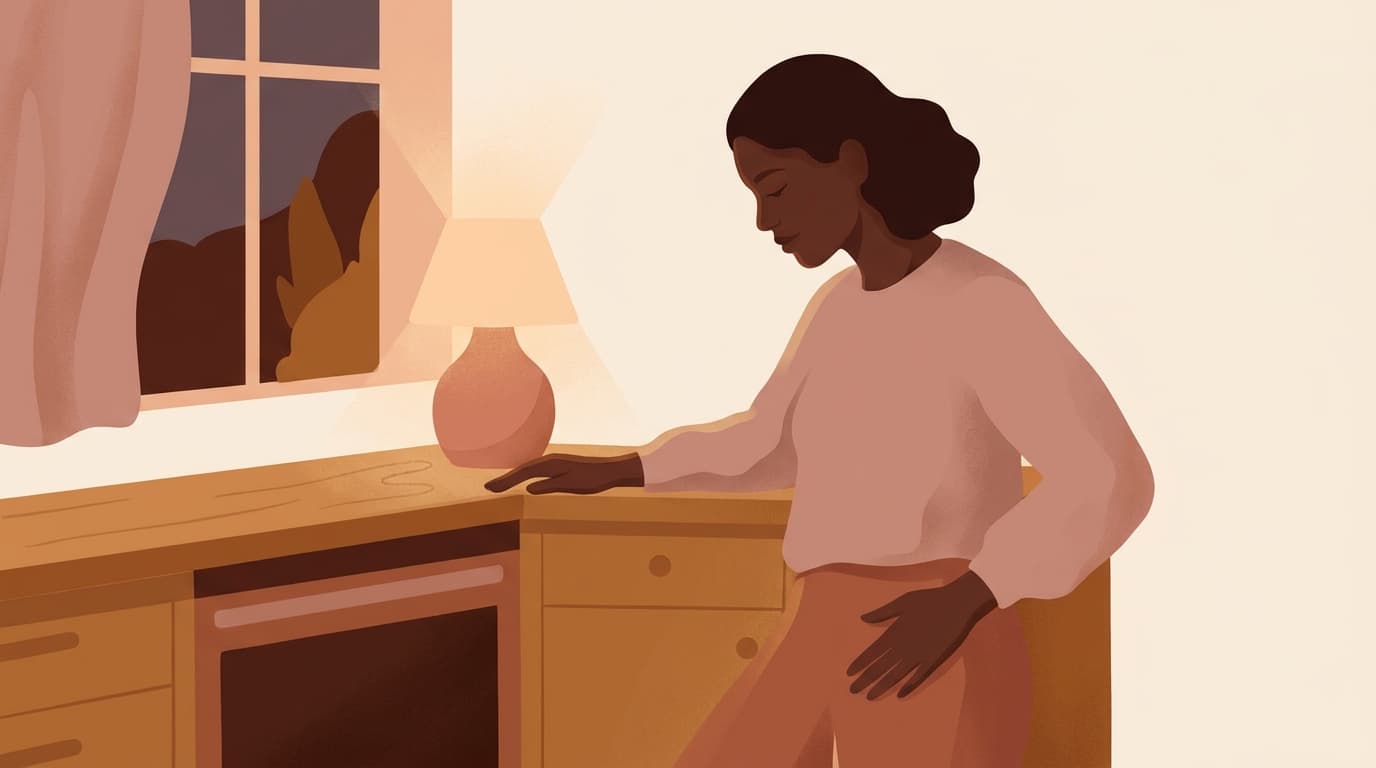
Most women describe PeVD as a dull, dragging heaviness — "like my insides are being pulled down" — that builds through the day, worsens with standing and before periods, eases lying down, and can flare into sharp, breath-holding stabs. It often favours one side.
Pain is hard to compare when you've only ever felt your own. This guide gathers the patterns our community describes — hundreds of women, remarkably consistent — so you can hold your experience up against it. Every body is different; patterns are signals, not verdicts.
The signature: heaviness that obeys gravity
The core sensation is rarely a cramp. It's weight — dragging, aching fullness low in the pelvis, as if something is bearing down. And it follows gravity with almost mechanical loyalty:
- Builds over the day; worst after long standing or sitting
- Relieved by lying down — many women describe the specific ritual of finally lying flat and feeling it drain
- Standing tolerance shrinks: "I can do 30–60 minutes, then I have to lie down" is a sentence we hear constantly
That gravity-dependence is the single most useful thing to tell a doctor — period cramps and endometriosis don't usually care whether you're upright.
The sharper notes
On top of the heaviness, many describe:
- Stabbing or shooting flares — sudden, sharp, sometimes down into the hip or thigh; "you freeze, hold your breath and wait"
- Pain during or after sex that lingers — not just discomfort in the moment, but an ache that stays for hours or into the next day
- Radiation — into the lower back, hip, buttock or down the leg, which is why it gets mistaken for spine and hip problems
- One-sided dominance, classically the left, though right-sided patterns exist
The cruellest feature: it comes and goes
"I get a month of relief, start believing I imagined it — then it's back with a vengeance." Fluctuation is typical: better weeks, savage weeks, often tracking the cycle (many women peak in the days before their period, when pelvic blood volume is highest). Two consequences worth naming: the good weeks make women doubt themselves, and single "snapshot" appointments during a quiet spell make doctors doubt them too. A two-week diary beats both.
How it differs from its lookalikes
Rough brushstrokes — overlap is common and mixed pictures are real:
- Period pain/endometriosis tends to be cycle-locked and cramping; PeVD aches daily with a positional signature (though endo and PeVD coexist often enough that one diagnosis shouldn't close the other).
- Musculoskeletal pain (hip, SI joint) usually responds to specific movements and positions, not simply to being upright vs lying flat.
- Bladder/bowel conditions come with their organ's own symptoms — though pelvic congestion can add pressure sensations there too.
Turn your pain into data
Before an appointment, jot down two weeks of: time of day it peaks, standing time before you need relief, cycle day, side, and anything that reliably helps. Then bring the pattern. The KINUUM check turns exactly these questions into a doctor-ready summary — it's the difference between "I hurt all the time" and a story a vein specialist recognises in thirty seconds.