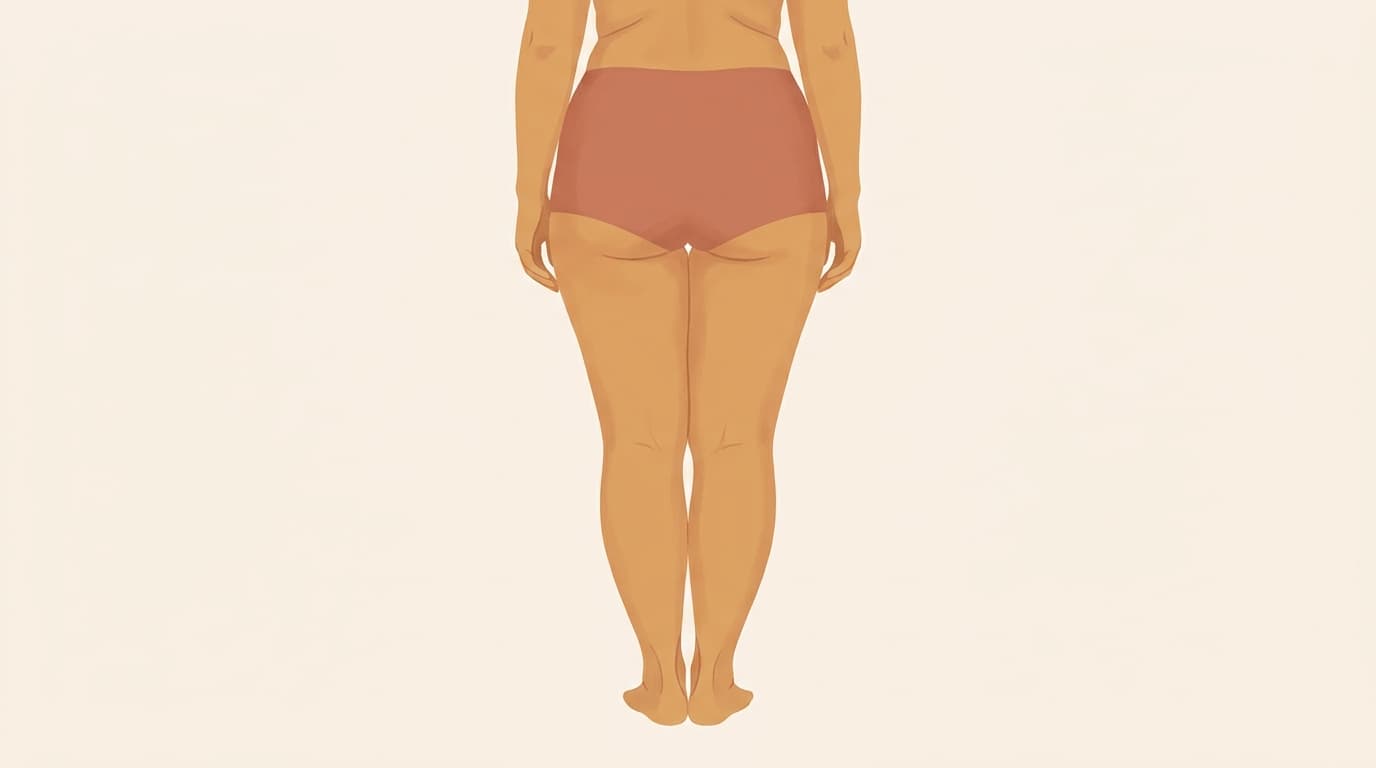
What is lipoedema?
Lipoedema — spelled lipedema in the US — is a chronic condition where painful fat builds up symmetrically in the legs (and often arms), almost exclusively in women. It is not caused by overeating and it does not respond to dieting the way ordinary weight does: women commonly lose weight everywhere except the affected limbs.
It's thought to affect up to about one in ten women to some degree, yet it is one of the most under-recognised conditions in medicine — routinely mistaken for "just weight gain" by clinicians who were never taught it exists.
What does it look and feel like?
- Symmetrical heaviness of hips, thighs and calves — often described as "column legs" — while the waist and upper body stay comparatively slim
- A cuff at the ankles: the heaviness stops abruptly, and the feet stay slim (a key difference from lymphoedema)
- Skin that is tender or painful to light touch or pressure
- Easy, unexplained bruising
- A soft, sometimes nodular feel to the tissue — like small grains under the skin
- Legs that ache and feel heavier as the day goes on
Who does it affect?
Lipoedema runs in families and almost always begins or worsens at times of hormonal change — puberty, pregnancy, or menopause. Many women describe their body "changing shape almost overnight" at one of these moments, then spending years being told to simply eat less.
How is it diagnosed?
Diagnosis is clinical — there is no blood test or scan that proves lipoedema. A clinician familiar with the condition recognises the pattern: symmetrical distribution, spared feet, tenderness, bruising, family history, hormonal onset. Imaging is sometimes used to rule out other causes of swelling, such as venous disease or lymphoedema — which can coexist with lipoedema and are worth checking for.
How is it managed?
There is no cure, but a great deal can reduce pain and protect mobility:
- Compression garments — often the single biggest daily difference
- Low-impact movement — swimming, cycling, walking; muscle pumping helps
- Skin care and weight stability — obesity on top of lipoedema worsens it, even though it didn't cause it
- Specialised liposuction — in some countries, lymph-sparing liposuction is an established treatment for advanced stages; availability and funding vary
Questions to bring to your doctor
- "My legs are out of proportion to my body, hurt to the touch and bruise easily — could this be lipoedema rather than weight gain?"
- "My feet aren't swollen — does that point away from lymphoedema?"
- "Can you refer me to someone who treats lipoedema specifically?"
- "Should my veins or lymphatics be checked as well?"