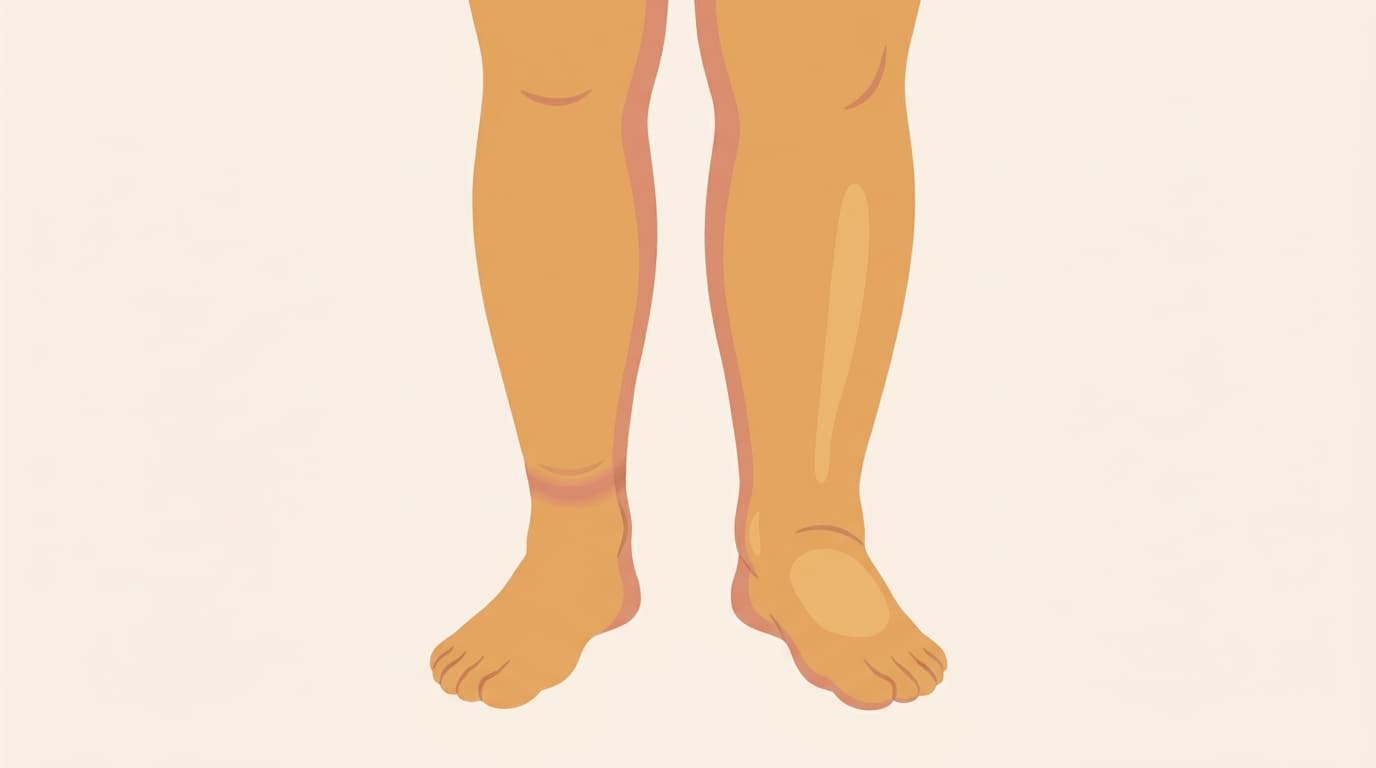
What is lymphoedema?
The lymphatic system is your body's drainage network — it collects the fluid that naturally leaks out of blood vessels and returns it to circulation. In lymphoedema, that drainage fails, and protein-rich fluid accumulates in the tissues, most often in a leg or arm.
It can be primary (a drainage system that was underbuilt from the start, sometimes surfacing at puberty or pregnancy) or secondary — following surgery, radiotherapy, infection, injury, or long-standing venous disease.
What does it look and feel like?
- Swelling in a limb that at first comes and goes, then stays
- Early on, the swelling pits — press a thumb in for a few seconds and a dent remains
- The foot is involved: puffy top of the foot, toes that look boxy — a key difference from lipoedema, which spares the feet
- Skin that slowly thickens or hardens over time; in later stages the pitting disappears because the tissue has become firm
- Heaviness, tightness, or clothes and shoes that fit one side but not the other
One practical sign clinicians use: if the skin fold at the base of the second toe is too thick to pinch, that points towards lymphoedema (Stemmer's sign).
Why early recognition matters
Untreated, the fluid triggers inflammation, the tissue scars and hardens, and the limb becomes vulnerable to a skin infection called cellulitis — which in turn damages the lymphatics further. Caught early, that spiral is largely preventable. This is why swelling that keeps returning deserves a name, not a shrug.
How is it diagnosed?
Mostly clinically — the history and the limb tell the story. Where it's uncertain, imaging of the lymphatics (lymphoscintigraphy or ICG lymphography) can confirm it, and an ultrasound of the veins is often done alongside, because venous disease can cause or worsen swelling and the two frequently overlap.
How is it treated?
The cornerstone is complete decongestive therapy: compression (bandaging, then fitted garments), specialised massage that redirects fluid (manual lymphatic drainage), exercise under compression, and meticulous skin care to prevent infection. It works — but it works best when started early.
Questions to bring to your doctor
- "My swelling pits when I press it and my foot is puffy too — could this be lymphoedema?"
- "Can I be referred to a lymphoedema clinic or therapist?"
- "Should my veins be checked as well, since the two often overlap?"
- "What should I do at the first sign of a skin infection in that leg?"