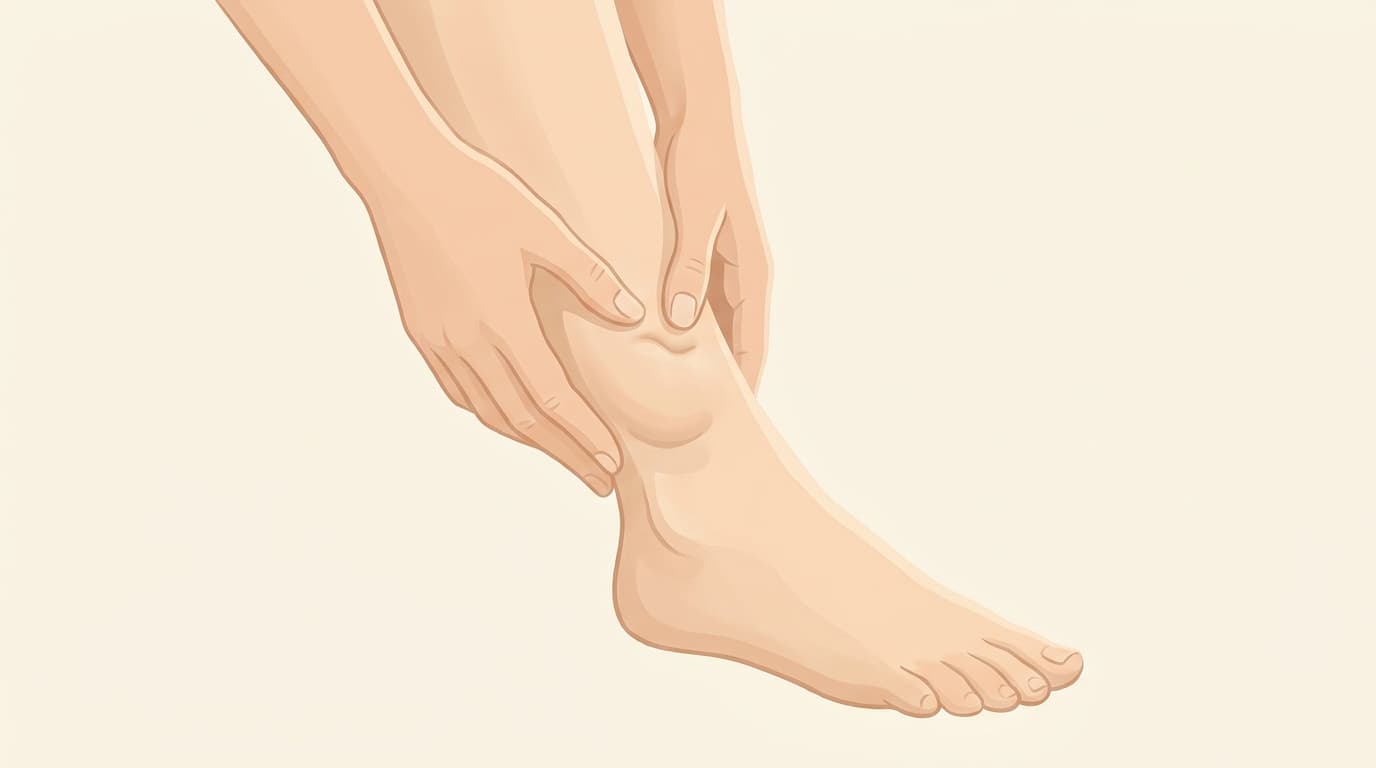
Press a thumb firmly into the swollen area for ten seconds. A dent that lingers means fluid — common in venous disease and in early lymphoedema. Swelling that includes the foot, favours one leg, or no longer disappears overnight is the pattern that deserves a proper assessment.
Sock marks by evening happen to almost everyone occasionally — heat, flights, long days standing. The question is never one evening; it's the pattern across weeks. Here's how to read yours.
The ten-second test
Press your thumb firmly into the puffy area — the inside of the ankle or the shin — and hold for ten seconds, then let go.
- A dent that stays (pitting): there is free fluid in the tissue. Both venous swelling and early lymphoedema pit.
- No dent, but the leg is large and firm: either the swelling isn't fluid (see lipoedema) — or lymphoedema has been there long enough for the tissue to harden. Firmness is information, not reassurance.
Patterns and what they suggest
Both ankles, worse by evening, gone by morning. The everyday venous pattern — gravity plus valves that struggle. Common, manageable, and worth reading about under venous insufficiency; compression and movement usually make a real difference.
One leg clearly more than the other. Asymmetry is the flag worth taking seriously. A persistently fuller left leg in particular can point to a compressed pelvic vein (May-Thurner); one swollen limb with a puffy foot points towards lymphatic drainage. Either way: this pattern has a cause, and it's findable.
Swelling that includes the foot and toes. Venous swelling tends to sit around the ankle; lymphoedema claims the foot — a puffy instep, toes that look boxy, skin at the base of the second toe too thick to pinch. That combination is the classic early-lymphoedema picture.
Swelling that stopped going away. Fluid that once drained overnight and now doesn't is the single most underrated sign. It marks the shift from "tired legs" to something that benefits from treatment — and lymphoedema treated early behaves very differently from lymphoedema treated late.
What a doctor can actually do
A clinical exam sorts most of this out, often helped by a duplex ultrasound of the veins (swelling is frequently venous, and the two systems overlap). Where lymphoedema is suspected, referral to a lymphoedema service gets you compression, drainage therapy and skin-care routines that genuinely change the trajectory — and protect against the infections that untreated swelling invites.
Come with specifics: which parts swell, whether mornings reset it, whether one side leads, and what your socks say at night. Patterns are what get taken seriously.