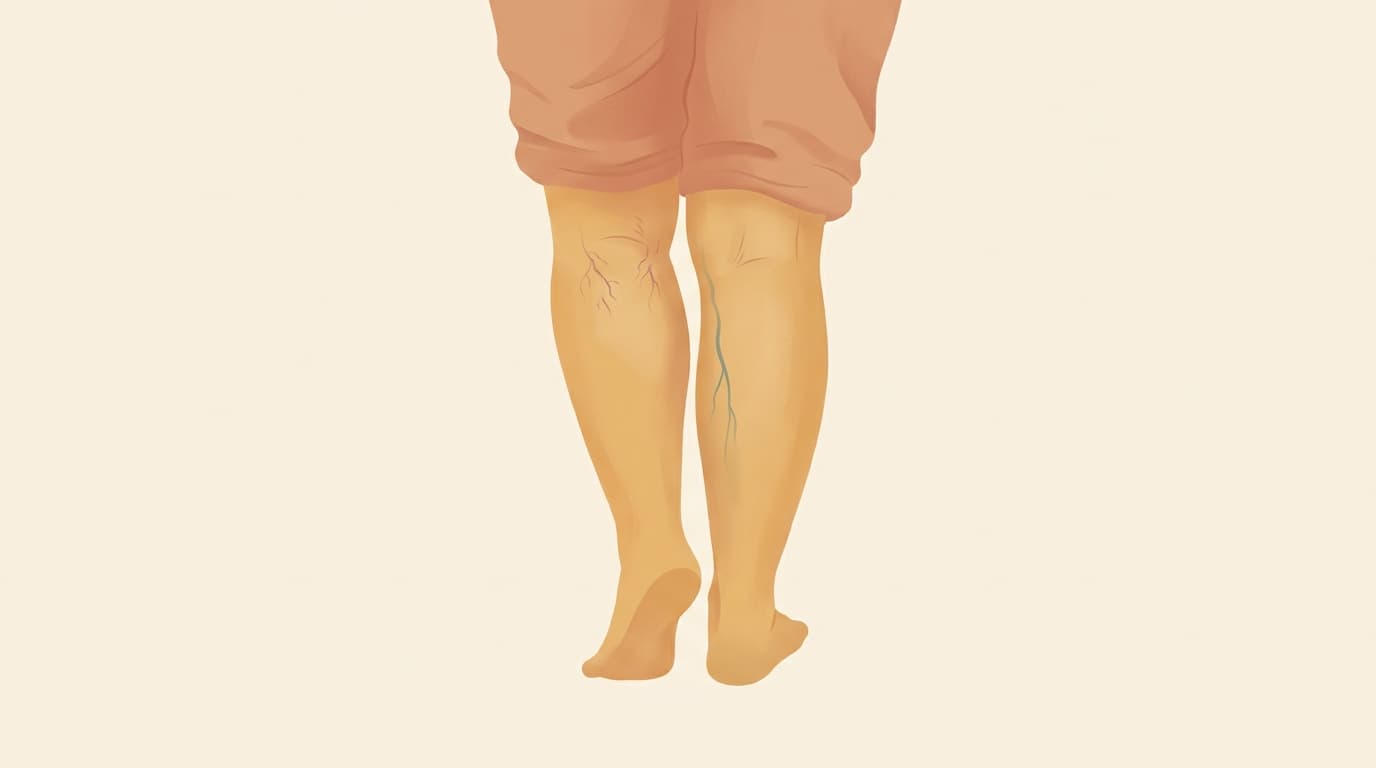
What is venous insufficiency?
Your leg veins carry blood back up to the heart against gravity, using one-way valves. In chronic venous insufficiency (CVI), those valves stop closing properly, so blood flows backwards and pools in the legs. The result is pressure — and pressure is what you feel as heaviness, see as veins, and eventually notice as skin changes.
It is extremely common, more so in women, and it is progressive: gentle symptoms now do not stay gentle on their own.
What does it feel like?
- Legs that feel heavy, tired or achy by evening, better in the morning and after lying down
- Swelling around the ankles at the end of the day — sock marks that take a while to fade
- Night cramps or restless legs
- Itching or dry, irritated skin on the lower legs
- Visible changes: spider veins, then bulging varicose veins, then — much later — brownish skin discolouration around the ankles
The visible veins and the symptoms don't always match: some women have severe symptoms with few visible veins, and vice versa.
Who does it affect?
The strongest drivers are family history, pregnancies, age, and long hours standing or sitting. Every pregnancy raises the load on leg veins; jobs on your feet do the rest. Hormones play a role too — one reason women are affected more often than men.
How is it diagnosed?
The test is a duplex ultrasound of the leg veins — painless, radiation-free, and done standing or tilted so the refluxing valves actually show. It maps which veins leak and how much, which is what any treatment decision rests on. Sometimes leg vein problems trace back further up: pelvic vein reflux can feed leg varicose veins, which is why recurring or unusual patterns deserve a look at pelvic venous disorder as well.
How is it treated?
- First line, always: compression stockings, movement, leg elevation — they manage symptoms and slow progression
- Closing faulty veins: endovenous laser or radiofrequency ablation, foam sclerotherapy — walk-in, walk-out procedures that have largely replaced vein stripping
- Skin care matters once discolouration or dryness appears, to protect against ulcers later
Questions to bring to your doctor
- "My legs are heavy and swollen by evening — can we do a standing duplex ultrasound of my veins?"
- "My veins came with pregnancy and are spreading — should they be assessed before they progress?"
- "Could my leg veins be fed from pelvic veins?"
- "Would compression stockings help me — and which class?"