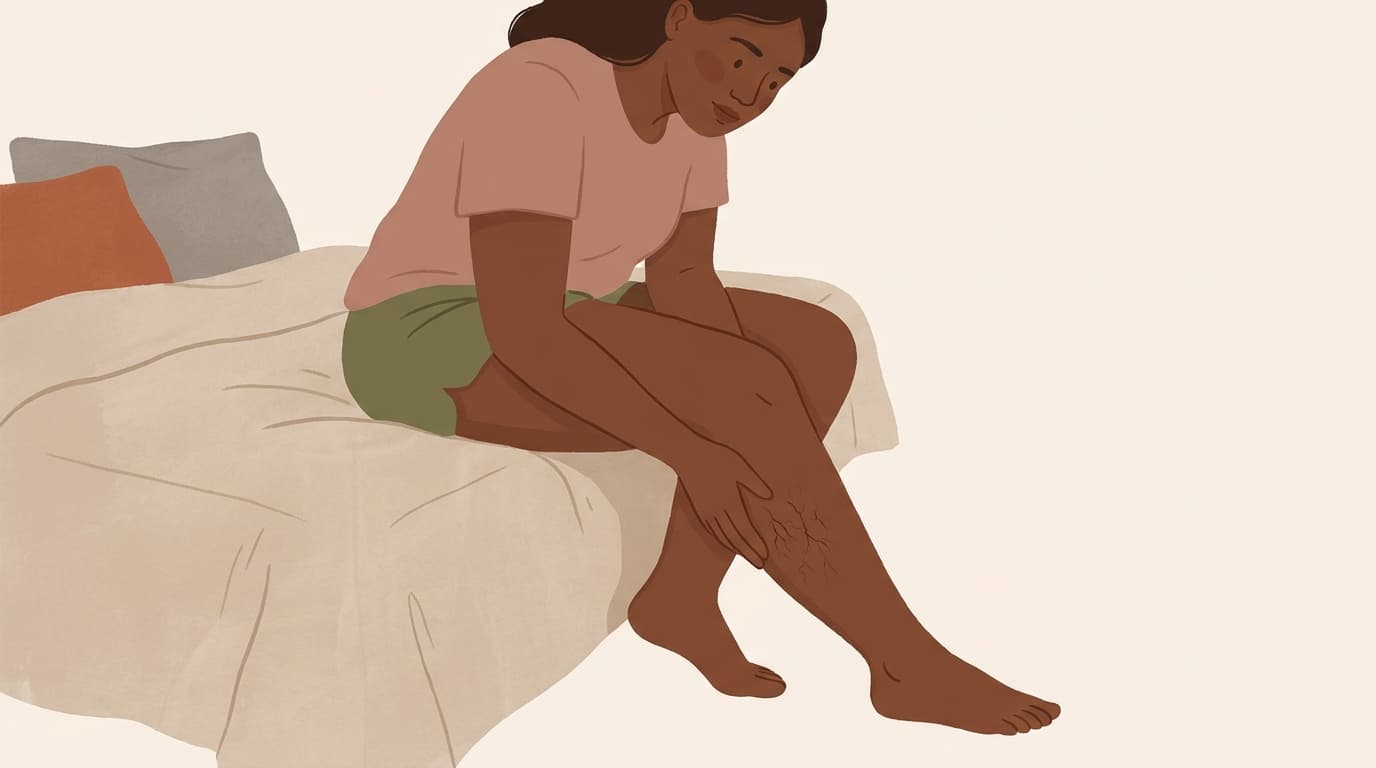
Fine spider veins are common and usually cosmetic. Veins that are new, spreading, bulging, aching or clustered around one area are a different story — they suggest the valves underneath are leaking, and that's worth a painless ultrasound rather than a wait-and-see.
Most women compare their legs to nobody's but their own — so when veins appear, it's hard to know what's "normal ageing" and what's the visible edge of something progressing underneath. Here's the same scale we use in the KINUUM check:
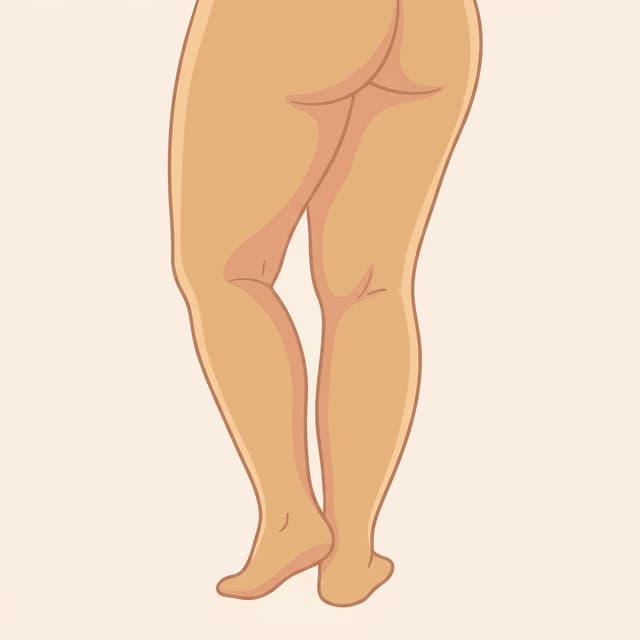
No visible veins
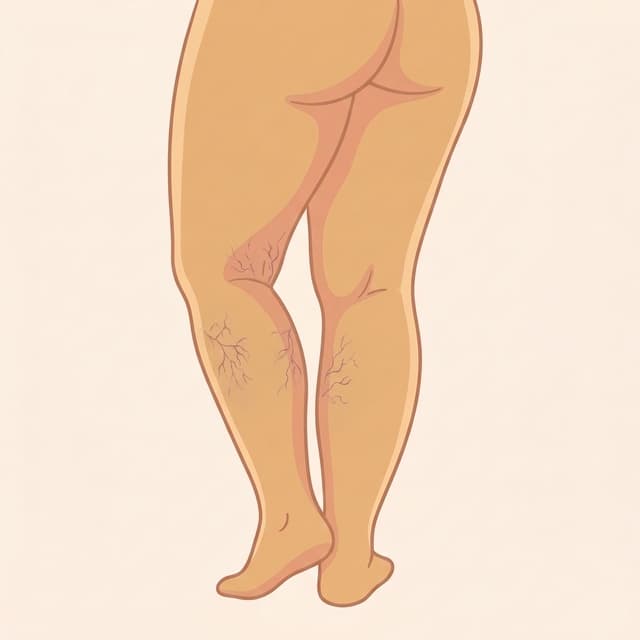
A few fine spider veins
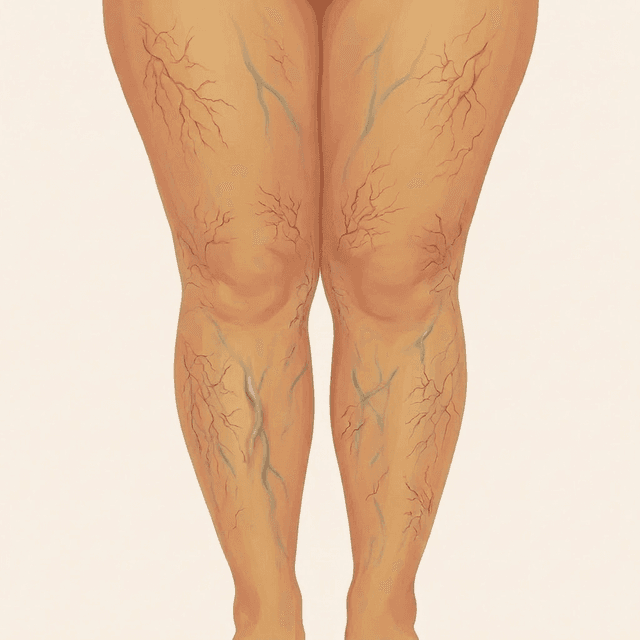
Several visible, some bulging
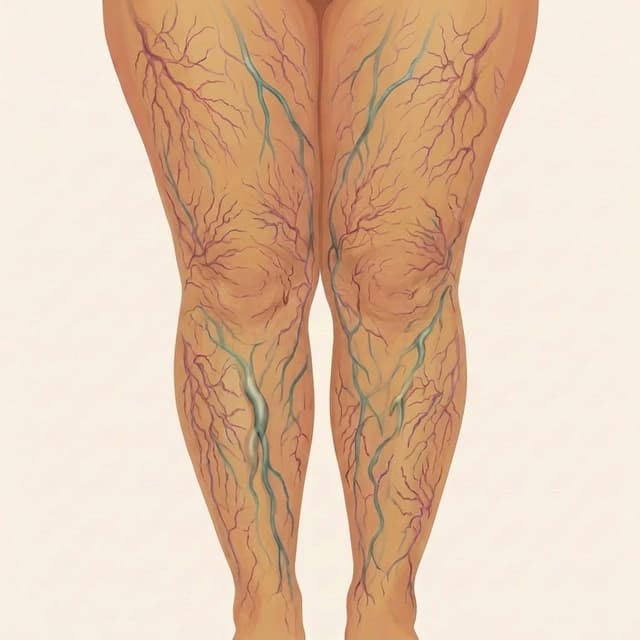
Extensive varicose veins
What each stage means
No visible veins. Veins can still be the cause of heavy, achy legs — symptoms and visibility don't always travel together. If your legs ache by evening, the absence of visible veins doesn't rule venous disease out.
A few fine spider veins. Thread-like red or purple webs, flat to the skin. Extremely common — most women have some by midlife. On their own, usually cosmetic. Worth watching if new ones keep arriving.
Several visible veins, some bulging. Blue-green veins showing through, one or two beginning to stand up from the skin. This is where "cosmetic" ends: raised veins mean valves below them are letting blood pool. An ultrasound now tells you what you're dealing with while options are simplest.
Extensive varicose veins. Widespread webs plus rope-like, bulging veins. The valves have been leaking for a while; skin changes (itching, dryness, darkening at the ankles) tend to follow. This stage firmly deserves a vein specialist — not because anything is urgent, but because treatment prevents the harder-to-reverse stages.
The two questions that matter more than the picture
- Are they changing? Veins that multiply or grow over months signal active reflux. Stable-for-a-decade veins are far less concerning.
- Do they come with symptoms? Heaviness, evening swelling, cramps, itching — visible veins plus symptoms is the combination that most warrants assessment.
Where they came from matters too
Veins that first appeared in pregnancy, veins around the vulva or upper inner thigh, or leg veins that returned quickly after treatment can be fed from above — from pelvic vein reflux. That pattern is worth reading about in our pelvic venous disorder guide, because treating the leg veins alone won't fix a pelvic source.