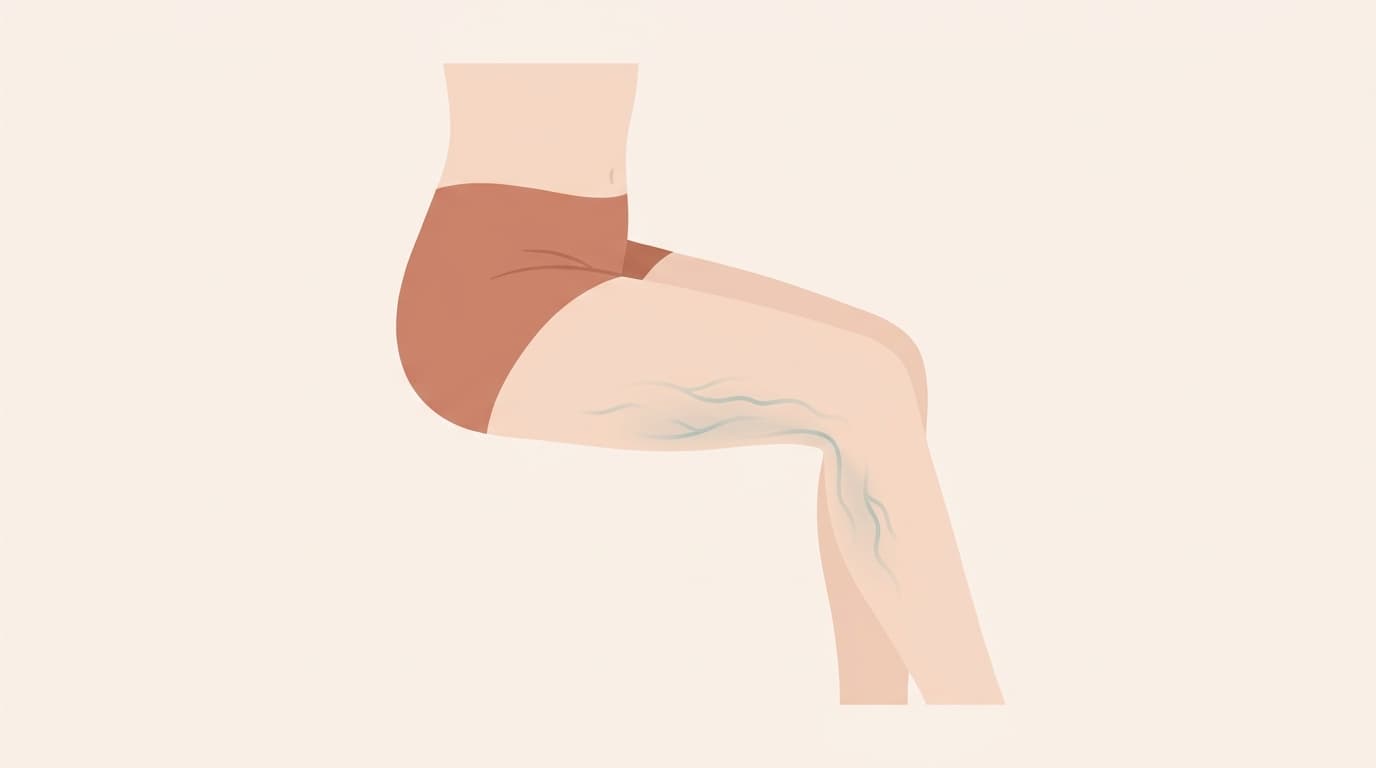
Leg veins are sometimes only the visible end of a leak higher up: refluxing pelvic veins feeding varicose veins down the thigh. The tell-tale signs are veins around the vulva or upper inner thigh, veins that arrived with pregnancy, and varicose veins that keep coming back after treatment.
"My leg veins turned out to be ovarian vein reflux — nobody had checked the pelvis." That message, in different words, appears again and again in our community: years of sclerotherapy and ablations, veins returning "worse and worse", until someone finally looked one level up.
The plumbing, in one paragraph
Blood from the pelvis normally drains upward through the ovarian and internal iliac veins. When their valves fail, blood runs back down — and some of it finds "escape routes" into the leg: through connection points in the groin, the buttock, and around the vulva. The result looks exactly like ordinary varicose veins from the knee down. Treat only what's visible and the source keeps pumping; the veins return.
Signs your leg veins have a pelvic source
- Location: veins on the vulva or labia, the upper inner thigh, the back of the thigh, or the buttock crease — territories leg valves alone don't explain
- History: veins that first appeared during pregnancy and never fully left, or worsen with each pregnancy
- Recurrence: varicose veins that came back — especially quickly — after sclerotherapy, laser or surgery
- Company they keep: pelvic heaviness, ache after standing, pain after sex — the PeVD pattern travelling with the leg veins
- Cycle link: leg symptoms noticeably worse before periods
None of these proves it; together they justify looking.
What to ask for
A standard leg duplex ultrasound examines the leg. If the pattern above fits, the sentence to say is: "Could my leg veins be fed from pelvic reflux — can the assessment include my pelvic veins?" That may mean a specialised duplex with manoeuvres, or MR/CT venography — and it's the difference between treating a symptom and treating a source. Our diagnosis guide covers the tests in order.
Why this matters for treatment order
Where a pelvic source is confirmed, many specialists treat top-down — close the pelvic leak first (usually by embolisation), then deal with whatever leg veins remain. It's the same logic as fixing the roof before repainting the ceiling. If you've had repeated leg treatments with early recurrence, that history alone is worth mentioning to an interventional radiologist or vascular specialist — see who treats this.